
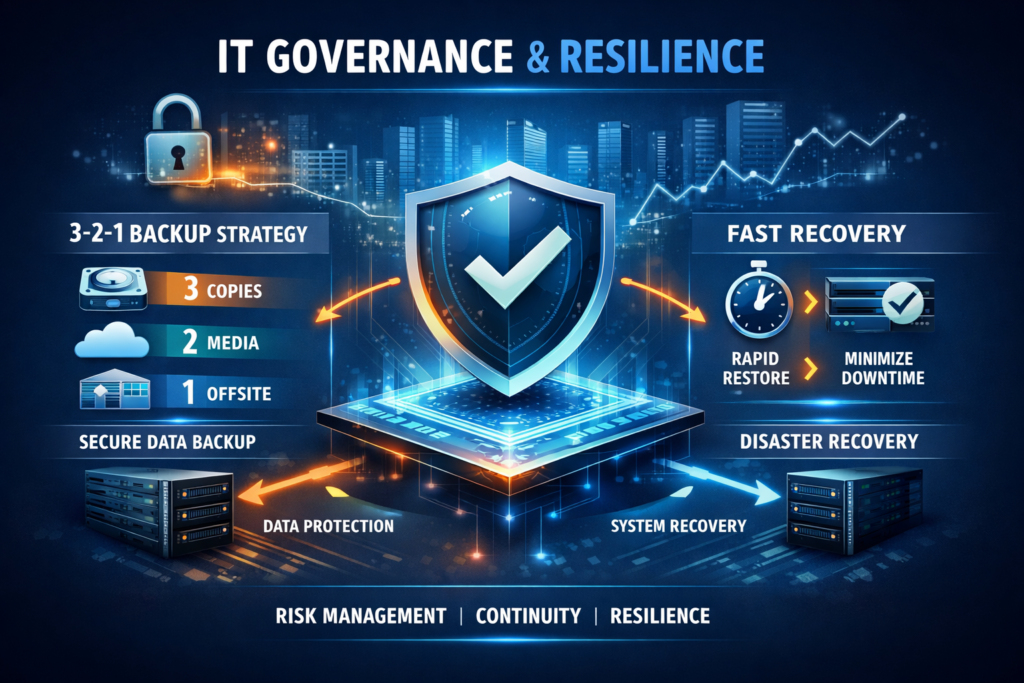
For years, IT governance focused almost entirely on protecting data. Backups, snapshots, replication, retention policies were the gold standards of “good governance.” The mission was simple: make sure the data exists somewhere safe. And for a long time, that was enough. The biggest threats were hardware failures, accidental deletions, or the occasional system crash. These were predictable problems, and the industry built predictable solutions.
But the world changed, and governance had to change with it.
Today’s organizations run on real-time digital operations, global connectivity, and nonstop customer expectations. At the same time, ransomware and cyberattacks have transformed outages from technical inconveniences into existential threats. Suddenly, it wasn’t enough to “have the data.” No organizations needed to get it back fast as outages are expensive
The classic 3‑2‑1 backup strategy is still a cornerstone of operational governance. It enforces discipline, resilience, and auditability. But governance now recognizes that protection alone doesn’t keep a business alive. Fast recovery has become a critical risk‑management requirement. Boards and regulators want to know not just whether the data is safe, but how quickly the organization can return to full operation when everything goes sideways.
Downtime is now the real enemy. Every hour offline means lost revenue, lost trust, and in some industries, regulatory exposure. That’s why modern IT governance is expanding its focus: from simply preserving data to ensuring the business can survive disruption. Protection keeps you compliant. Recovery keeps you alive.