
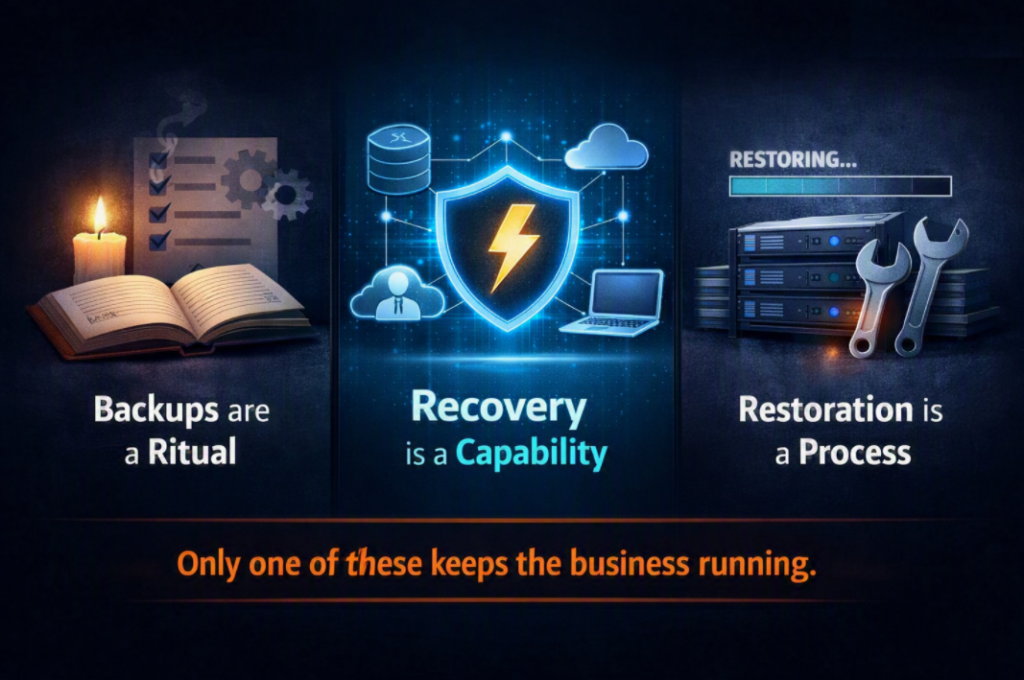
For decades, data protection has been built around one assumption: when something goes wrong, such as a hardware failure, a ransomware attack, a corrupted file system you restore data from a backup and eventually get back to normal. But “eventually” is no longer acceptable. Modern businesses run on continuous access, and every minute without access to data carries tangible operational and financial cost.
That’s why it’s time to draw a clear line between recovery and restoration. They are not the same thing, and treating them as if they are is exactly what keeps organizations offline longer than they need to be.
Recovery: Getting Back to Work
Recovery is the moment your organization regains functional access to the data and systems required to operate. The full environment can still be rebuilding behind the scenes.
Recovery means:
- Users can read and access the data they need
- Applications can resume transactions
- Workflows can restart
- The business is no longer “down”
In other words, recovery is about continuity, not completeness.
Traditional backup systems tie recovery to restoration: you can’t access anything until the restore finishes. That’s why recovery times are measured in hours or days.
Restoration: Rebuilding What Was Lost
Restoration is still essential, but it’s a different phase with a different purpose.
Restoration means:
- Rehydrating full file systems, volumes, or VMs
- Rebuilding primary storage
- Reconstructing the environment exactly as it was
- Completing the full recovery point
- Restoration is about completeness, not continuity.
It can take time, and that’s acceptable if the business is already back on its feet.
Why This Difference Matters to Customers
Ransomware changed the rules. They corrupt file systems. Then the attackers target backups. They force organizations into long rebuild cycles. A platform that restores clean data but can’t provide immediate access still leaves the business stranded.
Downtime is the real enemy. Customers don’t care how elegant the restore process is if they’re offline. Recovery is the metric that determines business impact, customer experience, and revenue loss.
The Bottom Line
Recovery is about when the business can function again. Restoration is about when the last byte is rebuilt. Most vendors treat these as the same step because their legacy architecture forces it as it ties access to completion. DataTrust separates recovery from restoration and that separation is what is required to deliver true continuity. As there is the difference between waiting to get back online and never going offline at all.