
For years, replication was the darling of IT continuity planning. It promised instant synchronization, seamless failover, and the comforting illusion that if one system went down, another would pick up right where it left off. But as governance frameworks have matured, a hard truth has emerged: replication is not resilience.
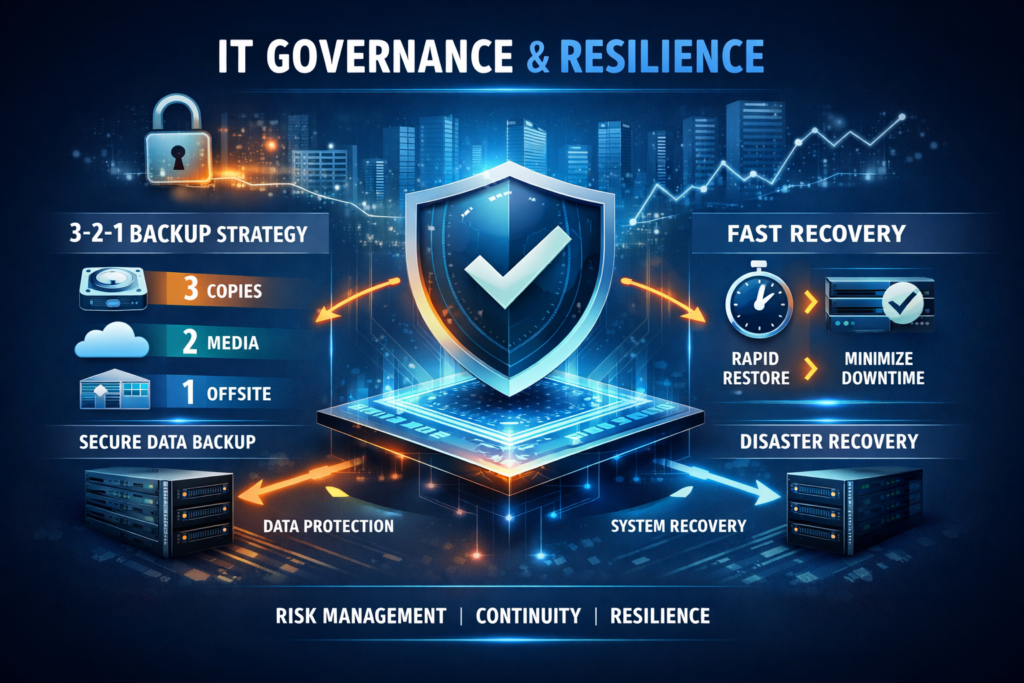
Replication is built for availability, not recovery. It mirrors everything, the good and the bad, in real time. When ransomware encrypts your production data, replication dutifully copies the encrypted files. When a user deletes a critical directory, that deletion is instantly replicated. In other words, replication doesn’t discriminate; it preserves the failure state as faithfully as the healthy one.
True resilience demands version control, isolation, and immutability. Replication typically lacks all three. It keeps only the current state, offers no clean rollback point, and often shares the same network and credentials as production systems. Meaning a single breach can compromise both environments. Governance frameworks like NIST and ISO 27001 now emphasize this distinction: replication supports uptime, but backups and continuity repositories support survival.
From a governance perspective, resilience means being able to restore operations safely and quickly after a disruption. A replicated copy of corrupted data can’t do that. Only immutable, versioned backups and tested recovery processes can. Replication keeps you running; resilience keeps you alive. And in a world where downtime is measured in lost trust and lost revenue, that difference isn’t academic, it’s existential.